


E‑commerce for B2B
Today's B2B customers expect a frictionless digital customer journey where even large purchases can be made without needing to contact a seller. At the same time, many companies face the challenge of managing complex processes and meeting the demands of modern tools. Webbhuset are experts in B2B e‑commerce and create customer-focused, scalable, and dynamic solutions that integrate seamlessly with your systems. Our future-proof platforms meet both today's and tomorrow's needs, providing you with the best conditions for success in your digital commerce.
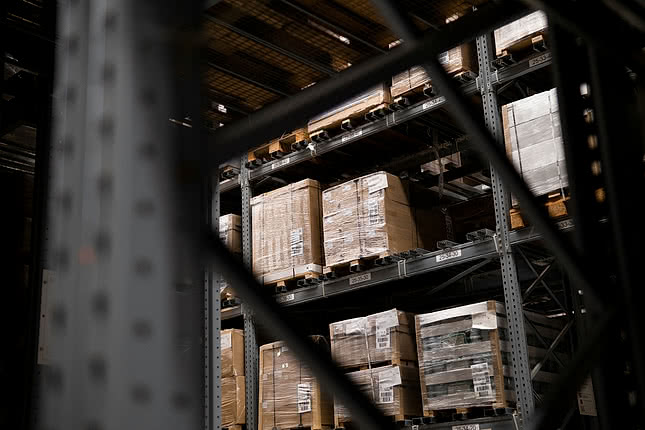








Scalable platforms for B2B e‑commerce
Succeeding with e‑commerce for B2B means creating a platform that meets the unique needs of corporate customers while streamlining the purchasing process. At Webbhuset, we build e‑commerce solutions for B2B that manage complex requirements, large volumes, and integrate seamlessly with existing systems.
We help you choose the right strategy for your B2B e‑commerce, whether you want to use platforms like Magento or Norce, or choose a platformless solution based on Fusion Storefront. Whether you need an e‑commerce solution from scratch or an advanced customer portal, we ensure the system is flexible and can grow with your business. Our scalable and future-proof solutions make it easy for your B2B e‑commerce to adapt to new market conditions.
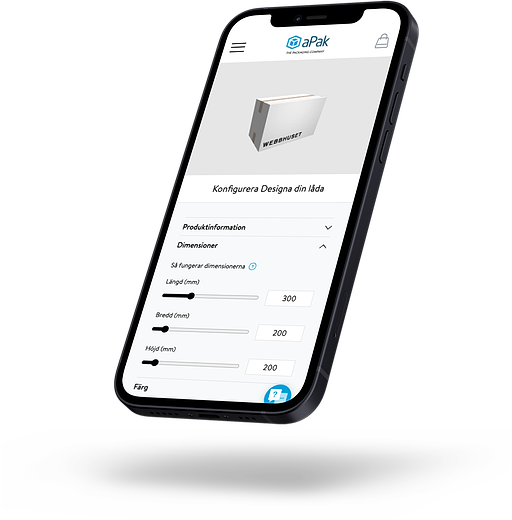
B2B features for a smoother customer experience
A well-functioning B2B e‑commerce platform offers a wide range of features that make the purchase process smooth, efficient, and tailored to the specific needs of corporate customers. At Webbhuset, we know that every business is unique, which is why we offer the ability to customize any features to match your requirements. Below are some common features – a starting point for creating a solution that is fully tailored to your needs.

Customer accounts and registration
Companies can create and manage their own accounts to place orders and track their transactions.

Pricing and discounts
Customized pricing depending on the customer's type, purchase history, or volume discounts.

Catalog and product information
Detailed product descriptions, specifications, images, and stock status.

Order management
Ability to easily add products to a shopping cart and make multiple orders.

Billing and payment options
Flexible payment methods such as invoice, credit card, bank transfer, and installment payment.

Delivery options
Customized shipping options and tracking information for orders.

Integration with ERP systems
Seamless integration with the company's existing systems for inventory, accounting and order management.

Search and filtering tools
Effective ways to search for products and filter results based on various criteria.

Order history and tracking
Customers can view their order history and status of current orders.

Support and customer service
Access to customer support via chat, phone, or email to help with questions and issues.

User access and roles
Different levels of access and permissions for users within a company, enabling order approvals and other functions.

Feedback and reviews
Opportunity for customers to leave reviews and rate products.
Seamless integrations
Our solutions are built on an architecture adapted to handle all vital integrations needed to run modern and efficient e‑commerce or customer portals. We offer connections to:
ERP Systems: (Enterprise Resource Planning): To synchronize inventory, orders, customer data, and financial transactions in real-time.
PIM Systems: (Product Information Management): To manage large product catalogs with many SKUs and variants and ensure product information is accurate and updated.
Payment Systems: Integration of secure and flexible payment solutions for a smooth purchasing experience.
Shipping Systems: Connections to leading transport and logistics systems that simplify shipping bookings, tracking, and deliveries.
CRM Systems: (Customer Relationship Management): To optimize customer relationships and collect all customer data in one place.
Other Business Systems: Customized connections to everything from BI tools to external platforms and services.
Merchants who have chosen Webbhuset

I believe that Webbhuset saw it as a fun challenge to work with Superfront again. Webbhuset was constructive throughout the process, and once we started the work, they had a very good approach to structuring and delimiting the project scope.
Yohan Deveaux, Head of E‑commerce at Superfront.

It feels really good to work with Webbhuset. Every time we have made a digital change, it is Webbhuset that has built and developed the logic behind it. They have a solid understanding of how everything is connected, which is a competence that is hard to replace, and that history is valuable.
Christian Karlsson, IT Solutions Manager at Newbody.
Merchants who have chosen Webbhuset
I believe that Webbhuset saw it as a fun challenge to work with Superfront again. Webbhuset was constructive throughout the process, and once we started the work, they had a very good approach to structuring and delimiting the project scope.
It feels really good to work with Webbhuset. Every time we have made a digital change, it is Webbhuset that has built and developed the logic behind it. They have a solid understanding of how everything is connected, which is a competence that is hard to replace, and that history is valuable.
Frequently asked questions about B2B e‑commerce solutions
Here we have compiled answers to some of the most common questions about B2B e‑commerce. If you have further questions, you are warmly welcome to contact us!
What is a B2B e‑commerce platform?
A B2B e‑commerce platform is a digital solution that enables companies to sell products or services to other companies. The platform is often tailored to handle larger order volumes, customer-specific prices, and advanced features that facilitate corporate purchases.
Which features are most important for a B2B webshop?
Key features for a B2B webshop include:
Customer-specific prices and product ranges.
Order history and quick order function.
Reusable purchase lists.
Inventory balance and expected delivery time.
Ability for sellers to "shop for" their customers. These features help create an efficient and customized experience for B2B customers.
How does B2B e‑commerce differ from B2C solutions?
B2B e‑commerce typically has more complex requirements than B2C, such as:
Support for volume discounts and customer-specific pricing.
Integration with ERP and CRM systems for smoother management of orders and customer data.
Ability to handle large order volumes and complex logistics.
Features like quick order and configuration tools to simplify the purchasing process.
What systems need to be integrated with a B2B platform?
Common systems to integrate with a B2B platform include:
ERP Systems: To synchronize inventory status, product data, and order management.
CRM Systems: To manage customer relationships and personalized experiences.
PIM Systems: To manage and centralize product information.
Shipping and Logistics Solutions: To optimize deliveries and tracking.
Payment Solutions: To enable smooth transactions and invoice management.
How are customer-specific prices and assortments managed?
With a B2B platform, each customer can have a unique price list and a customized product range. This is usually managed through integration with an ERP system, where customer-specific rules and agreements are handled and synchronized with the platform.
Can we use e‑commerce to help our sellers?
Yes! A B2B platform can include features that allow sellers to:
Place orders for their customers via the "shop for" function.
View customer history, prices, and product ranges directly in the system.
Create purchase proposals and send them to customers for approval.
How do you ensure scalability for our B2B solution?
We build all our solutions on a scalable architecture that makes it possible to:
Add new markets and languages.
Expand the product catalog without affecting performance.
Connect new systems and services as needed. This ensures you can grow without technical barriers.
How do inventory balance and delivery information work in B2B?
B2B platforms can show real-time updates of inventory status, delivery times, and availability based on information from your ERP system. This allows customers to see:
If a product is in stock.
When a backordered product can be delivered.
Current inventory status for multiple warehouses or distribution centers.
Can we manage international customers with your solution?
Yes! Our B2B solutions are adapted for global trade and include support for:
Multiple currencies and languages.
Customized rules for different markets.
Integration with global shipping and logistics solutions.
What is the cost of building a B2B e‑commerce platform?
The cost varies depending on your needs, features, and integrations. We always start by analyzing your business to create a solution that is both cost-effective and sustainable in the long term. Contact us for a quote tailored just for you!
With our extensive experience in B2B e‑commerce, we help companies build solutions that are robust, scalable, and fully integrated with existing systems. Do you have more questions? Get in touch – we're happy to help! 🚀
Book a demo with us today!
Recent B2B customer success stories









Do you want to know more?
Fill in the form and we will contact you shortly.